
String of Turtles Care Guide: Light, Water, Soil & Common Problems
Learn how to care for String of Turtles (Peperomia prostrata) with practical tips on light, watering, humidity, soil, fertilizer, propagation, and troubleshooting common issues.
String of Turtles Care Guide
String of Turtles (Peperomia prostrata) is a compact trailing plant known for small turtle-shell patterned leaves. It’s perfect for shelves and hanging planters where you want texture without high maintenance.
Quick answer: Keep String of Turtles in bright indirect light, let the top inch dry between waterings, and use a fast-draining mix.
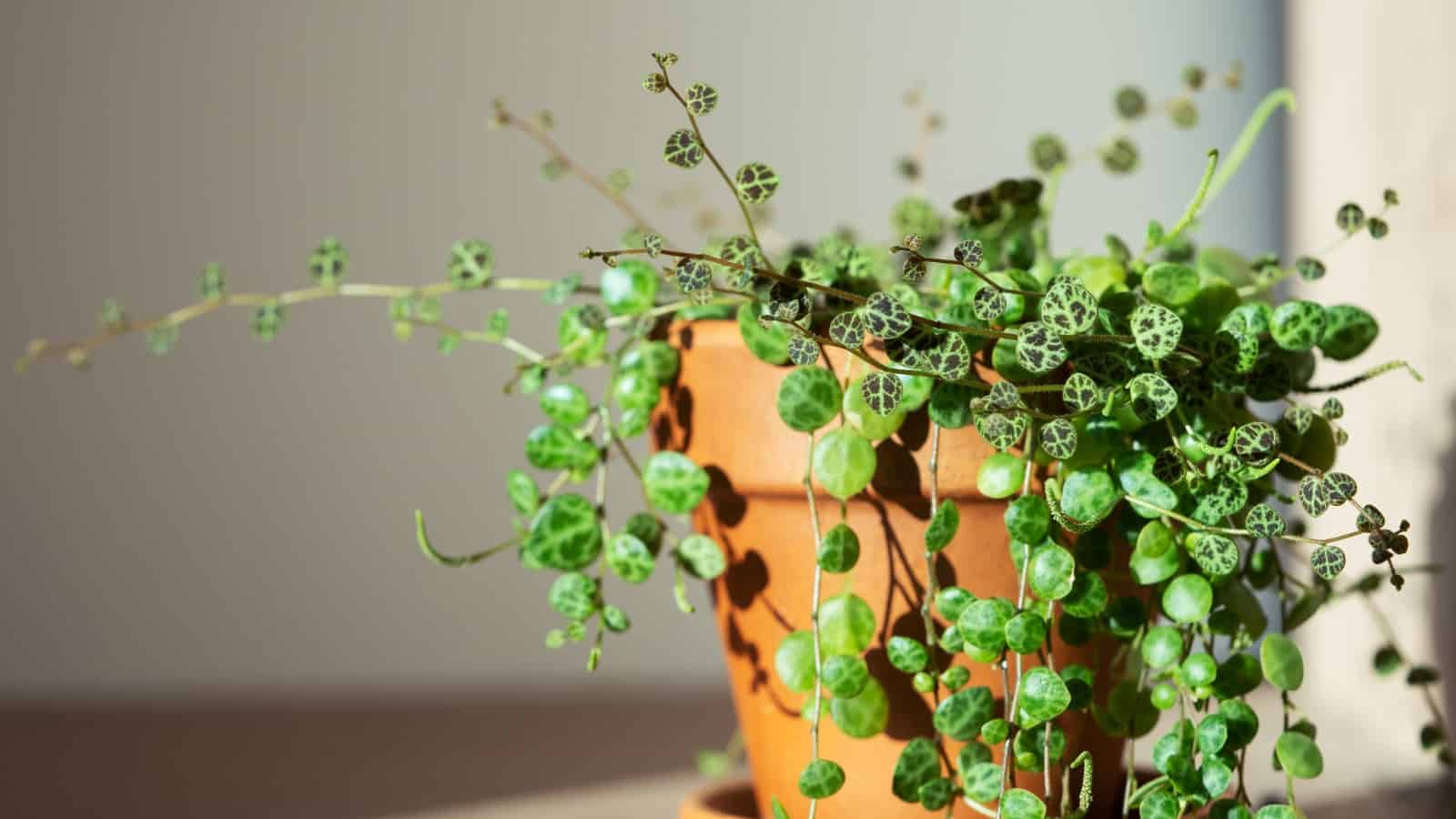
Plant Snapshot (At a Glance)
- Botanical name: Peperomia prostrata
- Common names: String of Turtles
- Plant type: Semi-succulent trailing peperomia
- Native range: Brazil
- Difficulty: Beginner to intermediate
- Pet safety: Non-toxic to cats and dogs
- Best placement: Bright shelf, hanging basket, or plant stand
Light Requirements
String of Turtles grows best in bright, indirect light.
- Ideal: bright room with filtered sun
- Tolerates: medium light (slower growth, less vivid pattern)
- Avoid: strong direct sun that scorches leaves
Signs your light is off
- Too much light: faded or scorched leaves
- Too little light: stretched vines, sparse spacing
Watering (How Often to Water String of Turtles)
Water when the top inch of soil is dry.
- In spring/summer: often every 7–10 days
- In fall/winter: reduce frequency
- Always: water deeply and let excess drain
Avoid overwatering: This semi-succulent is sensitive to soggy soil.
Humidity & Temperature
String of Turtles prefers:
- Humidity: 50–70%
- Temperature: 65–75°F (18–24°C)
Moderate humidity is usually enough in most homes.
Best Soil & Pot Type
Use a light, well-draining mix.
Recommended Mix
- 60% cactus/succulent mix
- 20% perlite/pumice
- 20% coco coir or fine orchid bark
Pot: Use a small pot with drainage holes.
Fertilizer Schedule
Feed in active growth:
- Balanced liquid fertilizer at 1/2 strength
- Every 4 weeks in spring/summer
- Reduce or stop in winter
Repotting
Repot every 12–24 months or when roots outgrow the pot.
Avoid oversized pots, which can stay wet too long.
Pruning & Grooming
- Trim leggy stems to encourage branching
- Remove sparse/damaged vines
- Rotate periodically for even growth
Propagation
Best method: stem cuttings.
Steps
- Take a 3–4 inch cutting with multiple leaves/nodes
- Remove lower leaves
- Root in water or moist mix
- Keep warm in bright indirect light until rooted
Common Problems (and Fixes)
Yellowing Leaves
Likely cause: Overwatering
Fix: Increase dry-down time and improve drainage.
Mushy Stems
Likely cause: Rot from soggy soil
Fix: Trim healthy cuttings and restart in fresh, airy medium.
Leggy Growth
Likely cause: Low light
Fix: Move to brighter indirect light.
Pests (Mealybugs, Spider Mites)
Likely cause: Indoor pest spread
Fix: Isolate and treat weekly until clear.
Is String of Turtles Toxic to Pets?
No. String of Turtles is generally considered non-toxic to cats and dogs.
FAQ
Why is my String of Turtles dropping leaves?
Most often from overwatering, sudden cold drafts, or abrupt care changes.
Can String of Turtles grow in low light?
It can survive, but pattern and density are better in bright indirect light.
Should I mist String of Turtles?
Occasional misting is fine, but airflow and proper watering matter more.
Related Care Guides
Final Thoughts
String of Turtles is a great low-footprint plant that looks premium with minimal effort. Keep light bright and watering controlled, and it will trail beautifully.
Exotica Botanica – your trusted source for rare houseplant care guides, tips, and tools.