
Monstera Deliciosa Care Guide: Light, Water, Soil & Common Problems
Learn how to care for Monstera Deliciosa with practical tips on light, watering, humidity, soil, fertilizer, propagation, and troubleshooting common issues.
Monstera Deliciosa Care Guide
Monstera Deliciosa (Monstera deliciosa), often called the Swiss Cheese Plant, is one of the easiest statement plants for indoor spaces. Its large split leaves and strong growth make it ideal for beginners and collectors alike.
Quick answer: Give Monstera bright indirect light, water when the top 2–3 inches are dry, and use an airy well-draining mix with support like a moss pole.
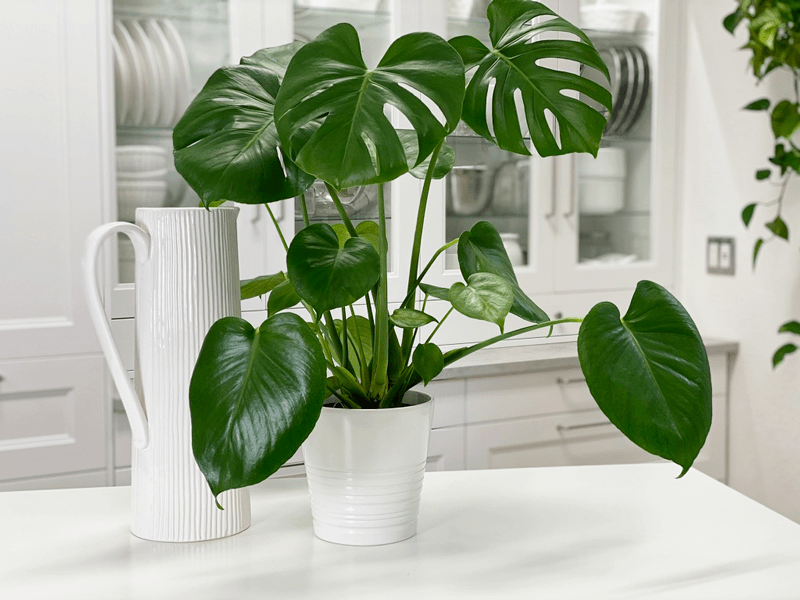
Plant Snapshot (At a Glance)
- Botanical name: Monstera deliciosa
- Common names: Monstera, Swiss Cheese Plant
- Plant type: Tropical climbing aroid
- Native range: Central America
- Difficulty: Beginner-friendly
- Pet safety: Toxic to pets
- Best placement: Bright room with space to climb
Light Requirements
Monstera grows best in bright, indirect light.
- Ideal: near east/south windows with filtered light
- Tolerates: medium light with slower growth
- Avoid: long periods of intense direct sun
Signs your light is off
- Too much light: pale leaves, scorch marks
- Too little light: no fenestrations (splits), leggy growth
Watering (How Often to Water Monstera)
Water when the top 2–3 inches of soil are dry.
- In spring/summer: roughly every 7–10 days
- In fall/winter: less often
- Always: water thoroughly and drain excess
Avoid overwatering: Constantly wet soil can cause yellow leaves and root rot.
Humidity & Temperature
Monstera prefers:
- Humidity: 50–70%
- Temperature: 65–85°F (18–29°C)
It tolerates average indoor humidity but grows faster with a humidity boost.
Best Soil & Pot Type
Use a chunky aroid mix with strong drainage.
Recommended Mix
- 50% quality potting soil
- 25% orchid bark
- 25% perlite/pumice
Pot: Always use drainage holes.
Fertilizer Schedule
Feed during active growth:
- Balanced liquid fertilizer at 1/2 strength
- Every 2–4 weeks in spring/summer
- Reduce in winter
Repotting
Repot every 12–24 months depending on growth.
Repot when roots circle heavily or water drains too quickly.
Pruning & Grooming
- Prune leggy vines to control shape
- Wipe leaves to remove dust
- Add a moss pole or trellis for larger leaves
Propagation
Most reliable method: stem cuttings with a node.
Steps
- Cut below a node (with aerial root if possible)
- Root in water or moist medium
- Keep warm and bright
- Pot up once roots are established
Common Problems (and Fixes)
Yellow Leaves
Likely cause: Overwatering
Fix: Increase dry-down time and verify drainage.
Brown Edges
Likely cause: Inconsistent watering or dry air
Fix: Water consistently and avoid hot/dry airflow.
No Leaf Splits
Likely cause: Insufficient light or immature growth
Fix: Increase light and provide vertical support.
Pests (Thrips, Spider Mites, Mealybugs)
Likely cause: Indoor pest pressure
Fix: Isolate and treat weekly until resolved.
Is Monstera Deliciosa Toxic to Pets?
Yes. Monstera contains calcium oxalate crystals and is toxic if chewed/ingested.
Safety note: Keep out of reach of pets and children.
FAQ
Why are my Monstera leaves not splitting?
Usually not enough light, no climbing support, or the plant is still juvenile.
Can Monstera grow in low light?
It can survive, but growth slows and leaf size/fenestration are reduced.
How often should I water Monstera indoors?
When the top 2–3 inches are dry; frequency changes with season and room conditions.
Related Care Guides
- Monstera Care Indoors: Practical Setup for Better Growth
- Monstera Care in Winter: Avoid Yellowing and Slowdown
- Best Grow Lights for Houseplants: What Actually Works Indoors
Final Thoughts
Monstera is forgiving and rewarding. Give it bright filtered light, an airy mix, and a climbing support, and it will become a standout focal plant.
Exotica Botanica – your trusted source for rare houseplant care guides, tips, and tools.