
Rattlesnake Plant Care Guide: Light, Water, Soil & Common Problems
Learn how to care for Rattlesnake Plant (Calathea lancifolia) with practical tips on light, watering, humidity, soil, fertilizer, propagation, and troubleshooting common issues.
Rattlesnake Plant Care Guide
Rattlesnake Plant (Calathea lancifolia) is a tropical foliage favorite with long wavy leaves, dark spotting, and purple undersides. It’s a great pick for plant lovers who can provide humidity and consistent moisture.
Quick answer: Keep Rattlesnake Plant in medium to bright indirect light, 60%+ humidity, and lightly moist soil with filtered water.
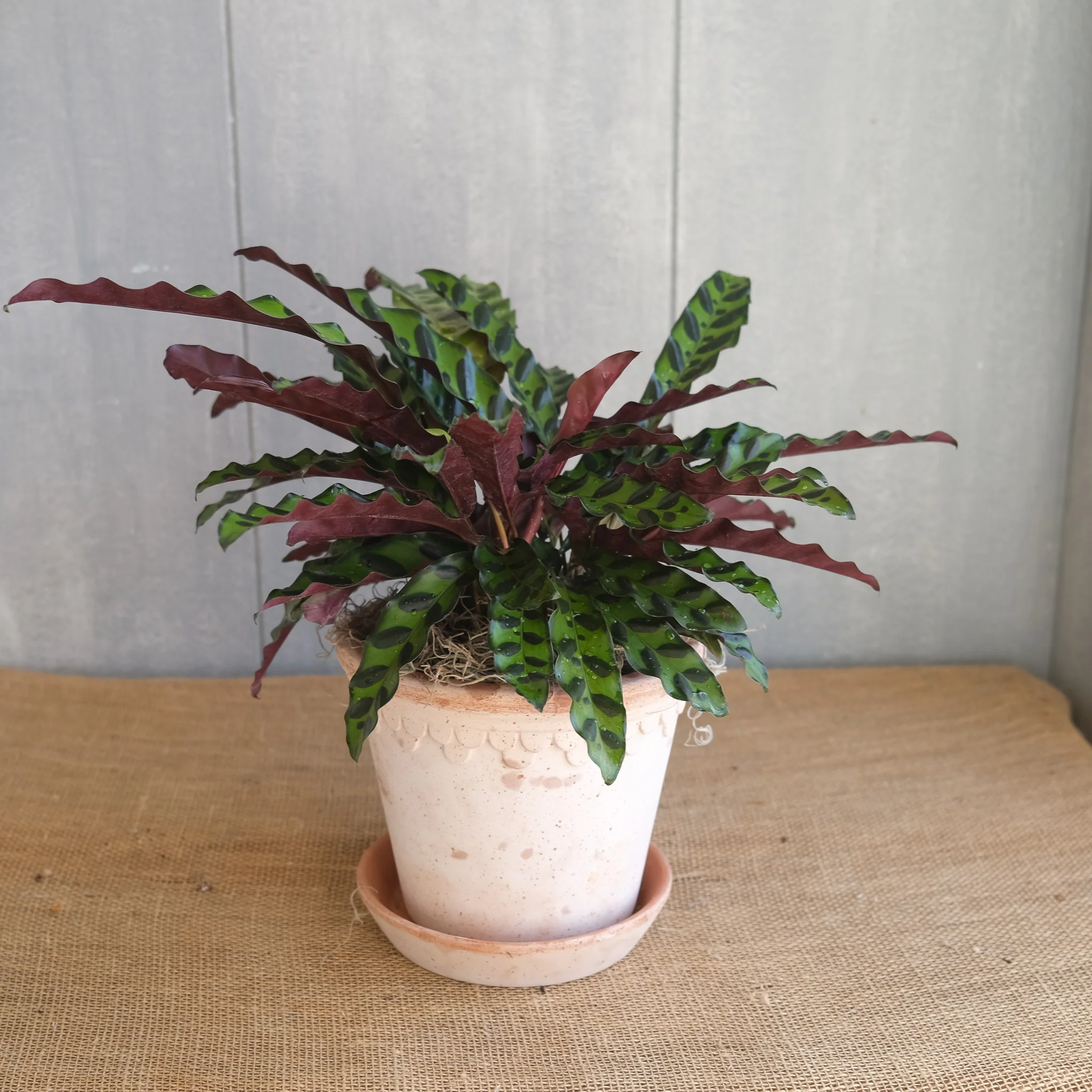
Plant Snapshot (At a Glance)
- Botanical name: Calathea lancifolia (often sold as Goeppertia insignis)
- Common names: Rattlesnake Plant
- Plant type: Tropical prayer plant
- Native range: Brazil
- Difficulty: Intermediate
- Pet safety: Non-toxic to cats and dogs
- Best placement: Warm, humid room with filtered light
Light Requirements
Rattlesnake Plant does best in medium to bright indirect light.
- Ideal: east window or bright room away from direct sun
- Tolerates: lower light (slower growth)
- Avoid: direct sun that fades patterning
Signs your light is off
- Too much light: washed-out leaves, burn spots
- Too little light: muted pattern and slower growth
Watering (How Often to Water Rattlesnake Plant)
Water when the top inch of soil feels slightly dry.
- In spring/summer: often every 5–8 days
- In fall/winter: reduce frequency
- Always: water thoroughly and drain excess
Avoid overwatering: Constantly wet soil can cause root problems.
Water Quality Tips
- Best: filtered or distilled water
- Tap water salts/chemicals can cause brown tips
Humidity & Temperature
Rattlesnake Plant prefers:
- Humidity: 60–70%
- Temperature: 65–80°F (18–27°C)
Use a humidifier if indoor air is dry.
Best Soil & Pot Type
Use a well-draining but moisture-retentive mix.
Recommended Mix
- 50% potting mix or coco coir
- 25% perlite/pumice
- 25% orchid bark
Pot: Drainage holes required.
Fertilizer Schedule
Feed during active growth:
- Balanced liquid fertilizer at 1/2 strength
- Every 4–6 weeks in spring/summer
- Reduce in winter
Repotting
Repot every 12–24 months or when roots are crowded.
Best repot window: spring.
Pruning & Grooming
- Remove damaged leaves at the base
- Wipe leaves occasionally
- Rotate for even growth
Propagation
Best method: division during repotting.
Steps
- Remove plant from pot
- Separate root clumps with healthy stems
- Pot divisions in fresh mix
- Keep warm and humid while they establish
Common Problems (and Fixes)
Brown Tips
Likely cause: Low humidity or tap water sensitivity
Fix: Raise humidity and switch water source.
Leaf Curling
Likely cause: Underwatering or low humidity
Fix: Water more consistently and increase moisture in the air.
Yellow Leaves
Likely cause: Overwatering
Fix: Let topsoil dry slightly more and improve drainage.
Pests (Spider Mites, Thrips, Mealybugs)
Likely cause: Dry indoor air
Fix: Isolate and treat weekly.
Is Rattlesnake Plant Toxic to Pets?
No. Rattlesnake Plant is considered pet-safe.
FAQ
Why does my Rattlesnake Plant close leaves at night?
That’s normal prayer-plant movement (nyctinasty).
Can Rattlesnake Plant live in low light?
It can tolerate lower light but performs best in medium-bright indirect light.
Should I mist Rattlesnake Plant?
Misting can help briefly, but a humidifier is more effective long term.
Related Care Guides
- Calathea Brown Leaves: Why It Happens + How to Recover
- Calathea Orbifolia Care Guide
- Spider Mites on Houseplants: Identification + 14-Day Treatment Plan
Final Thoughts
Rattlesnake Plant rewards consistency. If you keep humidity high and watering balanced, its foliage stays vibrant and dramatic all year.
Exotica Botanica – your trusted source for rare houseplant care guides, tips, and tools.